
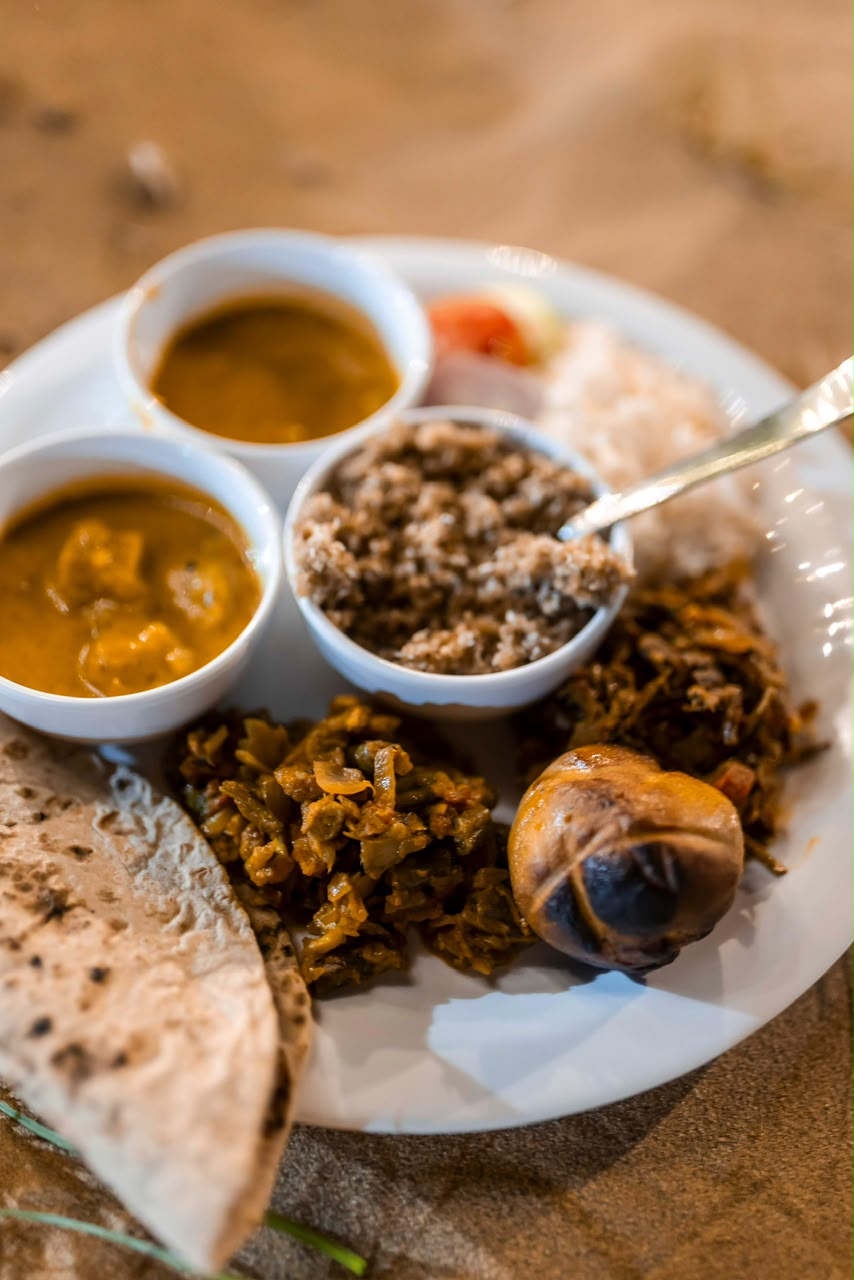
Regional food is part of the destination
Jaisalmer sits within Rajasthan’s desert region, but there is no single dish that represents every household or kitchen. Food traditions reflect local ingredients, family preferences, trade, climate and the wider culinary links across the state. Approach this guide as a list of ideas to look for, not a fixed tasting menu or a guarantee that a named dish will be served wherever you stop.
A useful first question is what is made fresh that day and how it is prepared. For snacks, ask whether an item is fried to order. For a full meal, ask about ingredients and spice level. If you have dietary needs or allergies, describe them clearly and ask the kitchen to confirm whether it can prepare the dish safely; do not rely on a name alone.
Official Incredible India food guidance highlights several Rajasthani dishes and Jaisalmer-area food experiences. The names below can help you recognise options while exploring, but current menus, prices, portions and preparation methods vary and should be confirmed directly.
Start with savoury snacks
Mirchi bhajiya and pyaz ki kachori are two savoury snacks named in official Jaisalmer food guidance. Both are useful names to recognise if you enjoy Indian snacks, but preparation differs between vendors. Ask about the filling, chilli intensity and whether a portion is made fresh if those details matter to you.
Food from a market stall and food served as part of a sit-down meal can be different experiences. At a busy stall, observe how food is handled and whether it appears freshly prepared. At a restaurant, ask about portion size and whether a snack is intended to share before ordering several items.
Do not confuse regional association with guaranteed availability. A street-food name in a travel guide is not evidence that a nearby cafe, rooftop restaurant or hotel kitchen has it on today’s menu.
- Mirchi bhajiya — ask how spicy the chilli and batter are.
- Pyaz ki kachori — ask about the filling and how it is served.
- Compare the preparation and setting rather than assuming every vendor follows the same recipe.
Recognise the hearty dishes of Rajasthan
Dal baati choorma is one of Rajasthan’s well-known meal combinations: lentils with baked wheat baati and a sweet, crumbly choorma preparation. It is often a substantial meal, so ask about the portion and accompaniments instead of ordering it alongside several large dishes by default.
Gatte ki sabzi and ker sangri are also part of the regional vocabulary highlighted in official tourism material. Ingredients and recipes can vary, so ask a restaurant how a particular preparation is made. If you avoid dairy, gluten, nuts or specific ingredients for medical or religious reasons, ask directly rather than making assumptions from a dish name.
Rajasthan’s wider menu includes food with different levels of heat and richness. Select one or two dishes that interest you and ask for a clear description. That is more useful than ordering from a photograph without understanding the ingredients or serving size.
- Dal baati choorma — a familiar hearty regional combination.
- Gatte ki sabzi — ask about the dumpling ingredients and gravy.
- Ker sangri — ask how the preparation is seasoned and served.
- Laal maas appears in wider Rajasthani food guidance; confirm ingredients and chilli level before ordering.
Leave room for drinks and a sweet finish
Official Jaisalmer food guidance also names kesariya thandai and makhania lassi. They are useful examples to recognise, but recipes and ingredients differ. Ask how a drink is prepared, whether it contains dairy or nuts, and whether it is made fresh or from a prepared mix if that matters to you.
A cool drink or a small sweet can round out a meal without making every stop a large dining commitment. If you are walking through the old city, choose a pause that fits the weather and your route rather than planning around an unverified opening time or assuming a particular stall will be open.
A local food experience should feel enjoyable rather than rushed. Ask questions, listen to the answer and choose something simpler if the ingredients or preparation are unclear.
A practical checklist before you order
Food descriptions can be broad. Ask whether a dish is vegetarian, which cooking fat is used, whether it contains dairy or nuts, and how spicy it is. If you have a food allergy, tell the restaurant explicitly and ask whether it can avoid cross-contact; do not treat an informal assurance as a medical guarantee.
For groups, agree on whether dishes are individual portions or intended to share. If you need to eat at a particular time, confirm current service hours directly. A travel page can describe a regional dish but cannot establish that a kitchen is serving it that day.
If you have mobility requirements or are meeting someone at a specific address, confirm the route and seating arrangements before travelling. In the Fort, lanes can be narrow and the last part of the journey may involve walking.
- Ingredients, cooking fat, spice level and serving size.
- Food allergies and cross-contact concerns, confirmed directly with staff.
- Current service hours, menu, prices and dietary options.
- A realistic walking and arrival plan if you are dining inside the Fort.
Ask about the hotel’s current rooftop dining options
Garh Jaisal’s Kitchen is the hotel’s rooftop dining destination, but this guide does not assert that any particular regional dish, dietary accommodation, service time or price is currently available. Ask the team what is being served on your date, which options fit your preferences, and whether a table can be arranged for your requested time.
If you are staying inside Jaisalmer Fort, consider the practical sequence of arrival, walking through the lanes and dining. The hotel’s directions page explains the arrival context. Leave time to reach the property and confirm directions in advance if you are unfamiliar with the Fort.
For current menu details or rooftop-dining questions, use the contact form. An enquiry is not a table reservation, and the hotel must confirm the actual arrangements directly.
- Ask for the current menu and prices before relying on an item mentioned in a travel article.
- Confirm the preferred date, number of guests, service time and dietary questions.
- Ask directly whether your requested table can be accommodated.
Sources and further reading
Use official references for broad destination guidance. Re-check time-sensitive transport, access and weather details close to your travel date.
- Incredible India — Discover Jaisalmer’s Culinary Kaleidoscope — Official overview of named snacks, dishes and drinks; not a current restaurant menu.
- Rajasthan Tourism — Jaisalmer destination guide — Official destination context for planning a visit.